


No products in the cart.
Stone Sinks vs Artificial Stone Sinks – Real Advantages and Differences
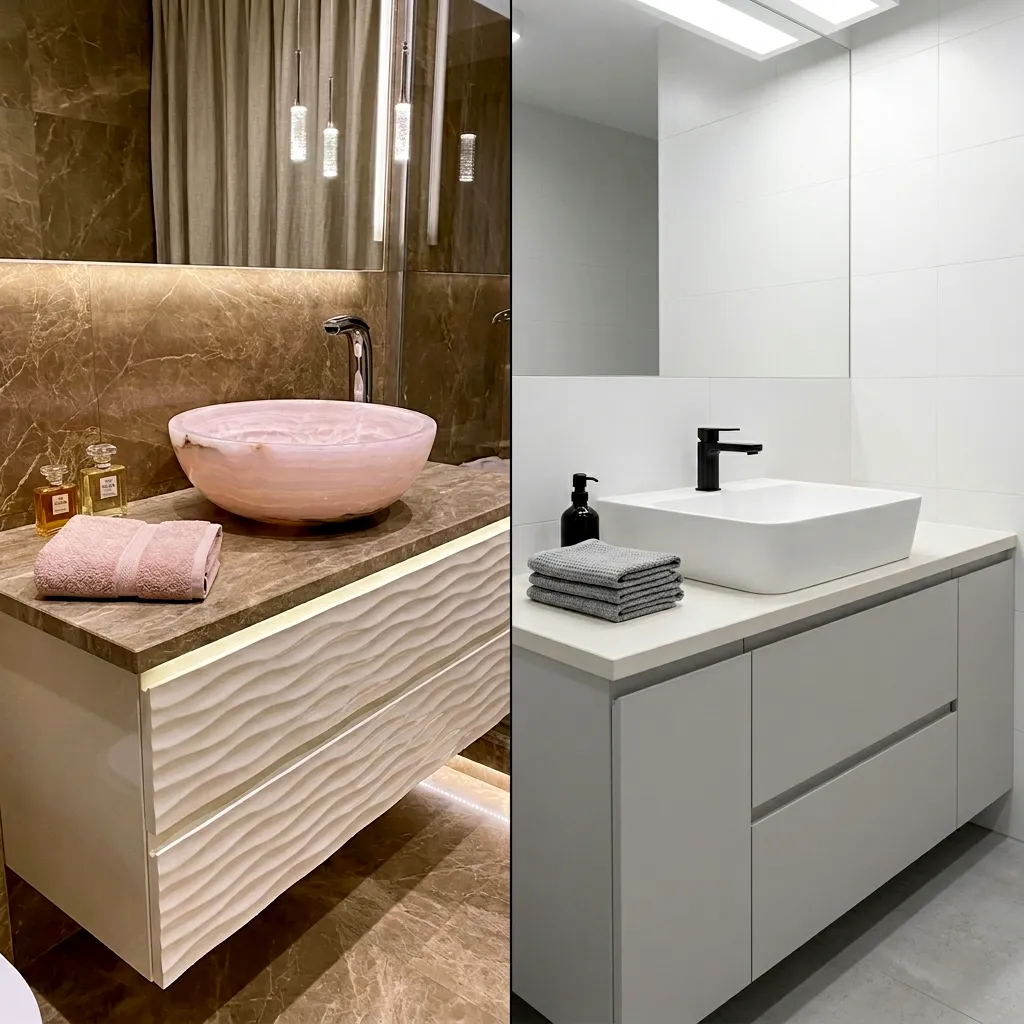
Stone Sinks vs Artificial Stone Sinks: Advantages, Durability and Which Material to Choose for Your Bathroom
When renovating a bathroom, choosing the right sink material is one of the most important decisions. Today, the two most popular options are natural stone sinks and artificial stone sinks, both offering a modern and attractive look.
However, even though both materials have their benefits, there are significant differences in terms of durability, maintenance, aesthetics, and long‑term performance. Natural stone sinks – including elegant onyx sinks – stand out for their exclusivity and strength, while artificial stone provides a more affordable and uniform alternative.
More and more people search on Google for terms like “stone sink pros and cons”, “natural stone vs artificial stone” or “which sink is best for a modern bathroom”. In this guide, we break down all the differences clearly and realistically.
Advantages of Natural Stone Sinks
One of the main reasons people choose natural stone sinks is their exceptional durability. Natural stone is a solid material that has been used in architecture for centuries thanks to its strength and longevity.
Main advantages:
- Very high durability: can remain in perfect condition for decades
- Resistant to daily use: withstands impacts and wear better than many materials
- Unique aesthetics: every sink is a one‑of‑a‑kind piece
- Exclusive, premium design: adds luxury and value to the bathroom
- Repairable: many surface damages can be polished or restored
Onyx sinks are especially appreciated for their natural beauty, translucency, and decorative visual effect.
Easy Maintenance of Stone Sinks
Contrary to what many people think, natural stone sinks do not require complicated maintenance.
With proper sealing:
- Easy cleaning with water and mild soap
- Good resistance to stains and moisture
- Occasional resealing when needed
This makes them a practical choice for everyday use.
Repair and Restoration
A major advantage of natural stone is its ability to be restored. Small scratches or marks can be removed through professional polishing.
This allows you to:
- Extend the sink’s lifespan
- Avoid full replacements
- Maintain the original appearance for many years
Disadvantages of Natural Stone Sinks
Although natural stone sinks are an excellent choice, there are a few drawbacks to consider:
Heavier weight
Natural stone sinks are significantly heavier than artificial stone sinks, which may require more careful installation and proper support.
Higher price
Natural stone usually has a higher initial cost due to extraction, craftsmanship, and exclusivity.
Natural variation
Although this is an aesthetic advantage for many, some people prefer uniformity, and every piece of natural stone is different.
Advantages of Artificial Stone Sinks
Artificial stone sinks also offer important advantages, especially for certain types of projects.
Main advantages:
- More affordable price
- Uniform and consistent surface
- Wide range of standard designs
- Lighter weight, easier installation
- Good stain resistance in some models
They are a practical option for projects with tighter budgets or when a visually uniform look is desired.
Disadvantages of Artificial Stone Sinks
Although functional, artificial stone has some limitations compared to natural stone:
Less scratch‑resistant
The surface can be more sensitive to daily wear.
Limited repair options
In many cases, damage cannot be fully restored.
Less aesthetic exclusivity
Since they are made in molds, designs tend to be repetitive and less unique.
Less luxurious feel
Although they imitate natural stone, they do not offer the same visual depth or authentic texture.
Cost Comparison: Natural Stone vs Artificial Stone
At first glance, artificial stone sinks are more economical. However, the long‑term analysis tells a different story.
Natural stone sinks
- Higher initial investment
- Very long lifespan
- Repairable
- Maintain their aesthetic value
Artificial stone sinks
- Lower initial cost
- More wear over time
- Limited repair options
- May need replacement sooner
In many cases, natural stone offers better long‑term value.
FAQs
Are stone sinks durable?
Yes, natural stone sinks are extremely durable and can stay in excellent condition for decades with proper care.
Do stone sinks require a lot of maintenance?
No, maintenance is simple and mainly involves basic cleaning and occasional sealing.
Can stone sinks be repaired if damaged?
Yes, in most cases surface damage can be polished or restored.
Is artificial stone durable?
It is durable, but generally less so than natural stone, especially when it comes to scratches or impacts.
Which material is best for a modern bathroom?
It depends on your budget, but for luxury, durability, and a unique aesthetic, natural stone and onyx sinks are usually the best choice.
Are onyx sinks suitable for daily use?
Yes, as long as they are properly sealed and maintained, onyx sinks are both functional and highly decorative.
Which lasts longer, natural stone or artificial stone?
In general, natural stone sinks have a much longer lifespan and better restoration potential.
Conclusion
If you’re looking for a bathroom sink that combines durability, exclusive design, and long‑term value, natural stone sinks — especially onyx sinks — are one of the best options available.
Although artificial stone offers advantages such as lower cost and uniformity, natural stone stands out for its strength, repairability, and unique aesthetics, making it a more solid investment for modern, high‑quality bathroom renovations.
Easy Tips for Marble Sink Maintenance
Marble Sink Maintenance Made Easy Many people believe that a marble sink is difficult to maintain. In reality,

Decorative Weights – A New Concept for Home Exercise
Decorative Weights for Training and Modern Home Aesthetics For decades, gym equipment has been defined by a single
How to Choose the Right Bathroom Sink Material
How to Choose the Right Bathroom Sink Material Choosing a bathroom sink may seem like a minor detail