


No products in the cart.
Trends in Home Decor 2026: Key Materials and Styles
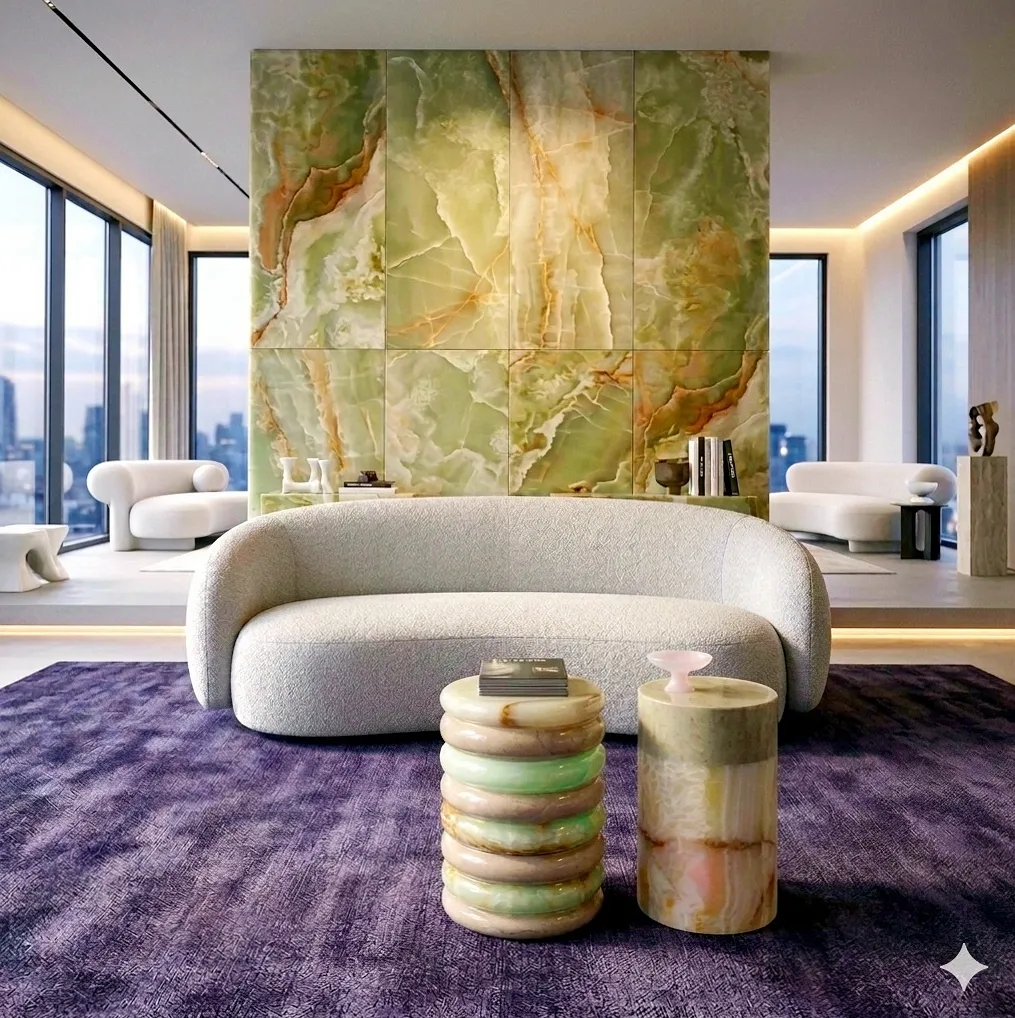
The new era of materials in our homes
Walk into a beautifully designed home today and you’ll notice something immediately. It doesn’t shout. It doesn’t overwhelm with decoration. Instead, it feels… grounded. Calm. Intentional.
The most exciting interior design trends of this year—and the years quietly forming ahead—aren’t really about trends at all. They’re about materials. Real ones. Stone you can feel, wood that ages, glass that plays with light. Homes are becoming more sensory, more architectural, and far more personal.
Designers across Europe, the United States, and Scandinavia are speaking the same language: authenticity over excess. And the materials we choose are writing the story.
Let’s step inside the styles shaping the future of living spaces.
When Stone Becomes the Star
For years, stone quietly lived in kitchens and bathrooms. Countertops, perhaps a tiled wall. Functional.
Not anymore.
Today, designers are treating stone like artwork. A slab of marble might climb from floor to ceiling in a living room, its dramatic veins looking almost like brushstrokes on a canvas. In another home, a coffee table is carved from a single block of onyx—solid, sculptural, quietly monumental.
The stones capturing designers’ imaginations right now include:
Travertine – warm, porous, earthy. Perfect for tables, shelves and fireplaces.
Calacatta and Arabescato marble – dramatic veining that turns surfaces into statement pieces.
Onyx – especially when backlit, glowing like amber or honey.
Quartzite – stronger than marble but just as visually striking.
Basalt and volcanic stone – deep, dark, architectural.
The beauty of stone is permanence. It reminds us that our homes aren’t disposable spaces. They’re places meant to last.
The Return of Wood — But Not the Way You Remember
If the early 2000s loved glossy finishes and ultra-sleek surfaces, today’s interiors are rediscovering the quiet poetry of wood.
But not polished, factory-perfect wood.
Designers are embracing wide planks, visible grain, and natural imperfections. Oak is everywhere—on floors, ceilings, cabinetry, and even walls. Walnut brings depth and elegance. Ash adds softness and light.
Imagine a living room with:
a low walnut coffee table
oak wall panels behind the sofa
linen curtains filtering warm sunlight
and a sculptural wooden chair that looks almost carved by hand
Wood is no longer background material. It’s emotional architecture.
It makes a house feel alive.
The Soft Industrial Era
Industrial style never really disappeared—but it has matured.
Gone are the cold lofts filled only with exposed pipes and concrete floors. The new industrial aesthetic is warmer, softer, and far more livable.
Steel and concrete still play an important role, but they’re balanced with natural textures.
Think of a kitchen where:
brushed stainless steel cabinets reflect light softly
a thick oak island adds warmth
smoked glass pendants float above the table
and the floor is finished in smooth microcement
Steel shelving, black metal frames, and minimalist hardware create structure. But wood, stone, and textiles keep the space welcoming.
It’s the meeting point between architecture and comfort.
Onyx, Glass and the Magic of Light
One of the most fascinating directions in modern design is how materials interact with light.
Designers are experimenting with translucent stones and textured glass to create interiors that change throughout the day.
A wall made of backlit onyx glows softly in the evening like a lantern. Fluted glass partitions blur spaces without blocking sunlight. Smoked glass tables appear almost weightless.
The materials leading this luminous movement include:
Onyx panels with integrated lighting
Ribbed or fluted glass
Hand-blown glass lighting
Steel or brass frames
These elements introduce a sense of quiet drama. Light becomes part of the décor.
Handmade Is the New Luxury
Perhaps the most meaningful shift in design is the return to craftsmanship.
In an era of fast furniture and mass production, people are rediscovering the value of objects made slowly and intentionally.
You see it everywhere:
Walls finished in clay plaster that catches the light unevenly.
Hand-cut zellige tiles shimmering with tiny imperfections.
Ceramic lamps that look sculpted rather than manufactured.
Materials driving this movement include:
terracotta
handmade ceramics
lime plaster
reclaimed wood
hand-hammered brass and copper
These textures give homes soul. They remind us that design is not only about beauty—it’s about human touch.
The Colors That Hold Everything Together
Interestingly, while materials are becoming richer, colors are becoming calmer.
Designers are turning toward tones inspired by landscapes:
warm sand and beige
olive green and sage
clay and terracotta
deep charcoal
soft ivory
These colors allow materials—stone veins, wood grain, metal finishes—to become the real focal points.
The result is an atmosphere that feels timeless rather than trendy.
The Real Trend: How We Want to Live
If there’s one idea connecting all these movements, it’s this: homes are becoming sanctuaries again.
People want spaces that feel authentic. Spaces that age beautifully. Rooms that feel calm after the noise of the outside world.
A marble table that will last decades.
A wooden floor that grows richer every year.
A glass wall that fills the room with morning light.
These are not simply design choices.
They’re expressions of how we want to live.
And in the coming years, the most inspiring interiors won’t necessarily be the most expensive or the most dramatic.
They’ll be the ones where materials speak quietly—and beautifully—for themselves.

Dumbbell exercises for beginners
Dumbbell exercises for beginners Marble Dumbbells: Exclusive Fitness Equipment That Transforms Home Training In modern living spaces, fitness

Marble Vessel Sinks: Pros & Cons
Marble Vessel Sinks: Pros, Cons, and Why They’re Worth Every Penny A Material Steeped in History and Luxury

Home gym interior design
Home gym interior design ideas Redefining Strength: How Marble Dumbbells Are Sculpting the Future of Fitness and Interior